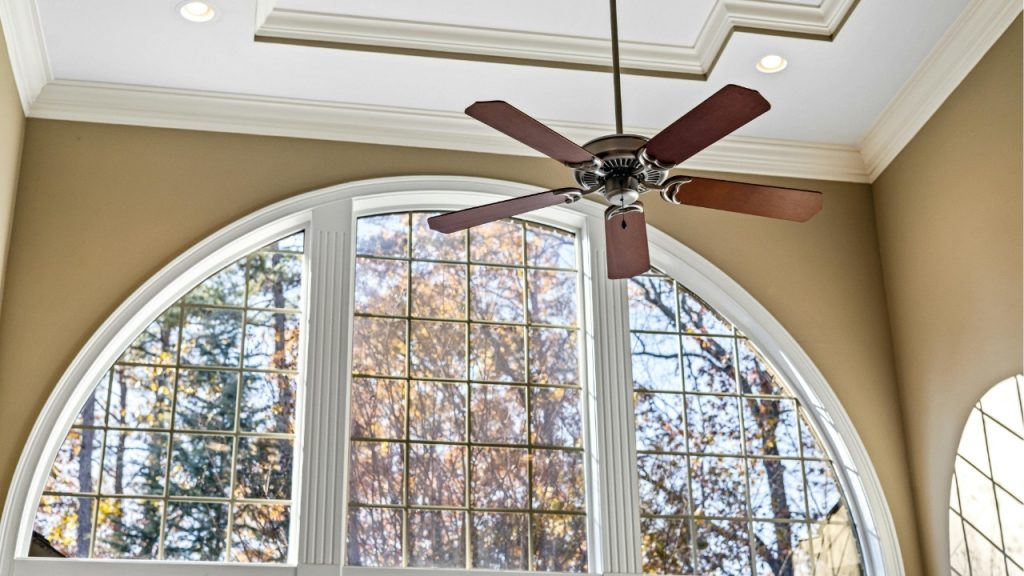

Did you know a ceiling fan can help you feel warmer in winter by pushing the warm air trapped near the ceiling back down into the room? If you are wondering how to set ceiling fan for winter, the good news is that the fix is simple, fast, and can help improve comfort while supporting better energy efficiency. By changing your fan direction to clockwise at a low speed, you can redistribute warm air and reduce the strain on your heating system.
Why Ceiling Fan Direction Matters in Winter
Warm air rises, which means the heat your furnace or space heater produces often collects near the ceiling instead of where you need it most. When you reverse ceiling fan direction for winter, the blades move air upward gently and push the warm air down along the walls. This creates a mild circulation effect that makes the room feel more evenly heated.
This small adjustment can help you stay comfortable without turning up the thermostat as much. For many homeowners, it is one of the easiest winter home tips for lowering heating costs.
How to Set Ceiling Fan for Winter
Changing your ceiling fan direction for winter only takes a minute or two. Follow these steps:
1. Turn Off the Fan
Always switch off the fan before adjusting the direction. If your fan is still running, wait until the blades come to a complete stop.
2. Find the Direction Switch
Most ceiling fans have a small direction switch on the motor housing. This switch is often located on the side or top of the fan body. Some newer models may use a remote control or wall control instead.
3. Set the Fan to Clockwise
To prepare your ceiling fan for winter, move the switch so the blades rotate clockwise. When viewed from below, the fan should spin to the right at a low speed. This winter setting helps push warm air downward without creating a strong breeze.
4. Turn the Fan to Low Speed
For the best results, keep the fan on low. The goal is air circulation, not a cooling effect. A low speed setting helps move warm air gently around the room while avoiding a draft.
How to Tell if Your Ceiling Fan Is in Winter Mode
If you are not sure whether your fan is set correctly, stand under it and watch the blade movement. In winter mode, the blades should rotate clockwise at low speed. You may also feel a soft updraft rather than a direct downward breeze.
Some fans include a marked switch for summer and winter settings. If yours does, winter mode usually means the blades turn in reverse. Check the owner’s manual if you are unsure about the exact setting.
Benefits of Using a Ceiling Fan in Winter
Using a ceiling fan in winter offers several practical benefits:
Improved Comfort
A ceiling fan helps eliminate cold spots and keeps room temperature more balanced.
Better Energy Efficiency
By redistributing warm air, you may be able to lower your thermostat slightly and still feel comfortable.
Less Furnace Strain
When warm air is circulated more evenly, your heating system may not need to work as hard.
Lower Heating Costs
Even a small thermostat adjustment can add up over time, especially during colder months.
Helpful Tips for the Best Results
To get the most from your winter ceiling fan setting, keep these tips in mind:
Use the Fan Only When Needed
If a room already feels evenly warm, you may not need the fan running all day.
Clean the Blades
Dust on the blades can reduce performance and spread particles through the air. A quick cleaning can improve airflow.
Pair It With Your Heating System
A ceiling fan works best as a support tool for your HVAC system, not a replacement for it.
Final Thoughts
Knowing how to set ceiling fan for winter is one of the simplest ways to improve indoor comfort during cold weather. Just switch the fan to clockwise rotation, keep it on low speed, and let it help move warm air back down into the room. This quick setup can make your home feel warmer, reduce wasted heat, and support better energy efficiency all season long.