Have you ever wondered how often you should clean your humidifier to keep the air in your home fresh and healthy? If you use a humidifier regularly, knowing how to sanitize humidifier parts properly is essential for preventing mold, bacteria, and mineral buildup. A well-maintained humidifier can improve indoor air quality, but a neglected one may do the opposite. In this guide, you will learn how to sanitize a humidifier safely and effectively, along with simple maintenance tips to keep it running at its best.
Why Sanitizing a Humidifier Matters
Humidifiers add moisture to dry indoor air, which can be helpful during winter or in arid climates. However, standing water inside the tank can quickly become a breeding ground for germs if the unit is not cleaned often. Sanitizing a humidifier helps remove harmful microorganisms, reduce odors, and improve performance.
If you are searching for how to sanitize humidifier parts the right way, the key is to clean it regularly and avoid letting water sit in the tank for long periods.
How Often Should You Sanitize a Humidifier?
For best results, clean your humidifier after every use if possible, especially with daily operation. A deeper sanitize humidifier routine should be done at least once a week. If you notice slime, a musty smell, or white mineral deposits, clean it immediately.
What You Need Before You Start
Before sanitizing, gather these basic supplies:
Basic Cleaning Supplies
- White vinegar
- Water
- Mild dish soap
- A soft brush or toothbrush
- A clean microfiber cloth
If your manufacturer allows it, you can also use a diluted bleach solution for sanitizing certain parts. Always check the instruction manual first.
Step-by-Step: How to Sanitize Humidifier
1. Unplug and Disassemble
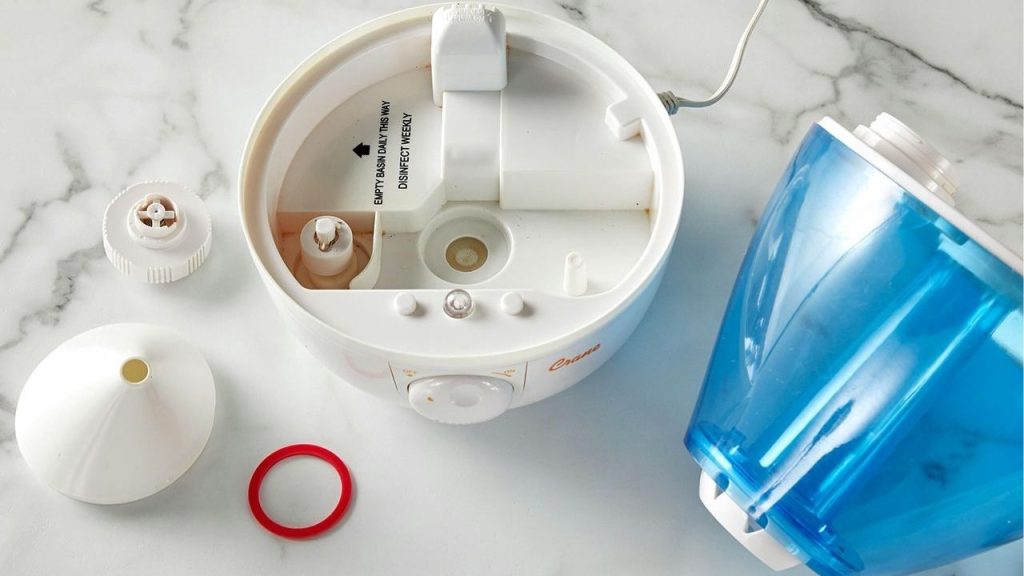
Turn off the humidifier, unplug it, and separate the tank, base, filter, and any removable parts. Never clean the unit while it is connected to power.
2. Empty All Water
Pour out any remaining water from the tank and base. Stagnant water is one of the main causes of bacteria growth, so this step is important.
3. Wash with Soap and Water
Use mild dish soap and warm water to clean the tank and removable parts. Wipe away visible dirt and rinse thoroughly to remove soap residue.
4. Remove Mineral Buildup with Vinegar
If you see hard water stains or white crust, fill the tank with equal parts white vinegar and water. Let it sit for about 20 to 30 minutes, then scrub gently with a soft brush. This helps loosen mineral deposits and supports a deeper humidifier cleaning.
5. Sanitize the Parts
To sanitize humidifier components, use a solution recommended by the manufacturer. Many models can be sanitized with a diluted bleach mix, but never combine bleach with vinegar or other cleaners. Rinse all parts extremely well after sanitizing to remove any chemical residue.
6. Dry Completely
Let all components air dry fully before reassembling. Moisture left behind can lead to mildew and bacteria growth.
Helpful Humidifier Maintenance Tips
Use distilled or demineralized water when possible to reduce buildup. Replace filters as recommended by the manufacturer. Empty the tank daily, even if you plan to use the humidifier again soon. Store the unit in a dry place when not in use.
Common Mistakes to Avoid
Do not submerge the base in water unless the manual says it is safe. Avoid harsh scrubbers that can damage the tank. Do not skip rinsing after using vinegar or bleach. Most importantly, never let a dirty humidifier keep running.
Final Thoughts
Learning how to sanitize humidifier parts is one of the easiest ways to protect your home air quality and extend the life of your appliance. With regular cleaning, proper drying, and safe sanitizing methods, your humidifier can stay efficient, odor-free, and ready to use whenever you need it.