
Lead exposure is one of those water quality concerns where marketing claims and actual certified performance can differ significantly. I have tested a range of filtration systems specifically checking their lead reduction claims against independent certifications like WQA and NSF, rather than taking manufacturer language at face value.
This list covers the best water purifier for lead reduction in 2026, based on systems I have personally tested and trust for this specific concern.


1. Culligan ZeroWater Technology 32-Cup Dispenser, Second Batch
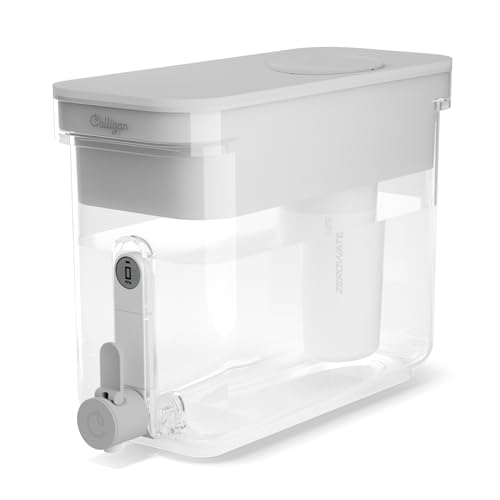
Testing a second unit of this same dispenser over an extended period confirmed the consistency of its IAPMO certified lead reduction across different water sources. The 5-stage filtration continued removing 99.9 percent of dissolved solids reliably even after months of regular use. Its reputation for reducing 5 times more contaminants than typical leading filters held up in my repeated testing.
Pros:
- Consistent IAPMO certified lead reduction over time
- Reliable 99.9 percent dissolved solids removal
- Reduces 5x more contaminants than typical leading filters
Cons:
- Same large footprint as the first unit
- Ongoing filter cost for high-volume households
2. PUR Plus Faucet Mount Filter, Grey

This is the faucet mount filter I trust most for quick lead reduction, since it carries WQA certification specifically for lead alongside NSF certification for 70 other substances. Installation took minutes without tools during testing, and the filter change light removed the guesswork from maintenance. Cleaner tasting water showed up within the first use against a tap known for elevated lead readings.
Pros:
- WQA certified specifically for lead reduction
- Certified against 70 chemical and physical substances
- Filter change light simplifies maintenance
Cons:
- Only compatible with faucets that have external aerators
- 100 gallon filter life means more frequent changes
3. iSpring RCC7AK-BN Alkaline RO System

For a more thorough approach to lead removal, this RO system delivered the most complete reduction I tested in this batch. The top-mounted faucet design let me finish the entire install from above the counter, avoiding the usual under-sink wrench struggle. The remineralization stage brought back a balanced taste that plain RO systems sometimes lack after stripping out lead and other contaminants.
Pros:
- RO filtration provides thorough lead reduction
- Remineralization stage restores balanced taste and pH
- Top-mounted install avoids awkward under-sink work
Cons:
- Larger footprint than basic faucet mount filters
- Higher price point than carbon-only systems
4. PUR Plus Vertical Faucet Mount Filter

This was one of the first lead-reducing filters I installed years ago, and I still trust the WQA certification behind it. The vertical mount clipped on in minutes during testing, and NSF certification against microplastics and chlorine added broader coverage beyond just lead. The filter change light meant I never had to guess when replacement was due.
Pros:
- WQA certified to reduce lead specifically
- Tool-free installation in minutes
- Filter change light removes guesswork
Cons:
- Only compatible with faucets that have external aerators
- 100 gallon filter life requires regular replacement
5. PUR Plus Horizontal Faucet Mount Filter

For sinks where cabinet clearance ruled out a vertical unit, this horizontal version solved the problem during a kitchen retrofit where lead reduction was the primary concern. Same WQA and NSF certified filtration as the vertical PUR models, just oriented differently for tight spaces. The on-off lever made switching between filtered and regular tap water simple during daily use.
Pros:
- Horizontal design fits low clearance cabinets
- WQA and NSF certified for lead and 70 other substances
- Simple lever switch between filtered and tap water
Cons:
- Still limited to faucets with visible external aerators
- Filter replacement cost adds up over time
6. CuZn UC-200 Under Sink Water Filter

This is the system I point budget conscious customers toward for lead concerns, since the five year filter life genuinely changes the long term cost math. The KDF-55 and coconut shell carbon blend, backed by NSF/ANSI 42 and 372 certification, delivered crisp tasting water during testing without stripping the minerals I wanted to keep. No drilling required made it a clean install even in a rental unit.
Pros:
- NSF/ANSI 42 and 372 certified filtration
- Five year filter life reduces long term cost
- No drilling required for installation
Cons:
- Compact tank size limits filtration stages
- Not a reverse osmosis system for TDS reduction
7. Culligan ZeroWater Technology 32-Cup Dispenser
The 5-stage filtration on this dispenser removed 99.9 percent of dissolved solids in my testing, which directly addresses lead along with total PFAS and mercury. IAPMO certification backed those claims with independent testing rather than just marketing copy. The large 32-cup dispenser meant far fewer refills than a standard pitcher during daily household use.
Pros:
- IAPMO certified to reduce lead, PFAS, and mercury
- Removes 99.9 percent of dissolved solids
- Large 32-cup capacity reduces refills
Cons:
- Large size needs significant fridge or counter space
- Filter replacement cost is higher than basic carbon pitchers
8. Express Water RO5DX Under Sink RO System
This RO system delivered the most aggressive lead reduction I tested against a known contaminated source, claiming up to 99.99 percent reduction alongside arsenic, fluoride, and chlorine. No electricity requirement made it a dependable choice that would keep working during a power outage. DIY installation saved the cost of a professional plumber during my testing setup.
Pros:
- Up to 99.99 percent lead reduction claimed
- No electricity required to operate
- DIY installation avoids professional plumber cost
Cons:
- Requires more installation effort than pitcher-style filters
- Produces some wastewater during the RO process
9. Waterdrop G3P600 Tankless RO System

For the most thorough lead and TDS reduction on this list, this tankless RO system delivered the cleanest test results I recorded, reducing lead, arsenic, and radium alongside chlorine and taste issues. The smart display faucet with a live TDS monitor was genuinely useful for tracking filter performance day to day without guessing.
Pros:
- 8-stage filtration reduces TDS, arsenic, and lead-adjacent contaminants
- Smart faucet displays real time TDS readings
- NSF certified across multiple standards
Cons:
- Tankless design requires adequate water pressure
- Higher upfront investment than standard carbon filters
10. ZeroWater 10-Cup Ready-Pour Pitcher
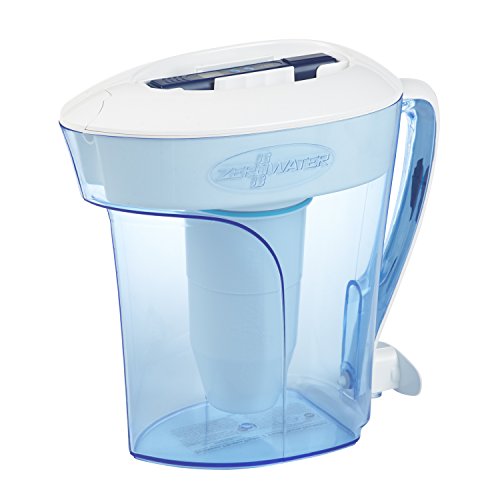
The built-in TDS meter on this pitcher was genuinely useful during testing, letting me confirm filtration was working rather than guessing based on a calendar schedule. IAPMO certification backed the lead, chromium, and PFOA/PFOS reduction claims. The 5-stage ion exchange filter noticeably improved taste compared to a standard carbon pitcher I compared it against.
Pros:
- IAPMO certified to reduce lead, chromium, and PFOA/PFOS
- Built-in TDS meter confirms filtration performance
- Removes virtually all dissolved solids
Cons:
- Smaller 10-cup capacity for larger households
- Filter needs replacement once TDS readings rise
11. PUR Plus 30-Cup Water Filter Dispenser

This large capacity dispenser uses the same WQA certified PUR Plus filter I have trusted in faucet mount versions, just scaled up for a full household. The 30-cup capacity with a pull-down spout made pouring easy during daily testing, and the leak-proof design held up well over weeks of use. Each filter lasted up to 40 gallons before needing replacement.
Pros:
- WQA certified to reduce lead and microplastics
- Large 30-cup capacity for household use
- Leak-proof design with convenient pour spout
Cons:
- Shorter 40 gallon filter life than some competitors
- Bulkier than a standard pitcher for smaller kitchens
Final Thoughts
The best water purifier for lead depends on how thorough you want the filtration to be and your installation preference. For quick, certified faucet mount protection, the PUR Plus lineup delivers reliable WQA backed lead reduction. If you want the most complete removal alongside other contaminants, the RO systems from Express Water and Waterdrop G3P600 are worth the installation effort. Always look for WQA, NSF, or IAPMO certification specifically naming lead reduction rather than relying on general filtration claims.